
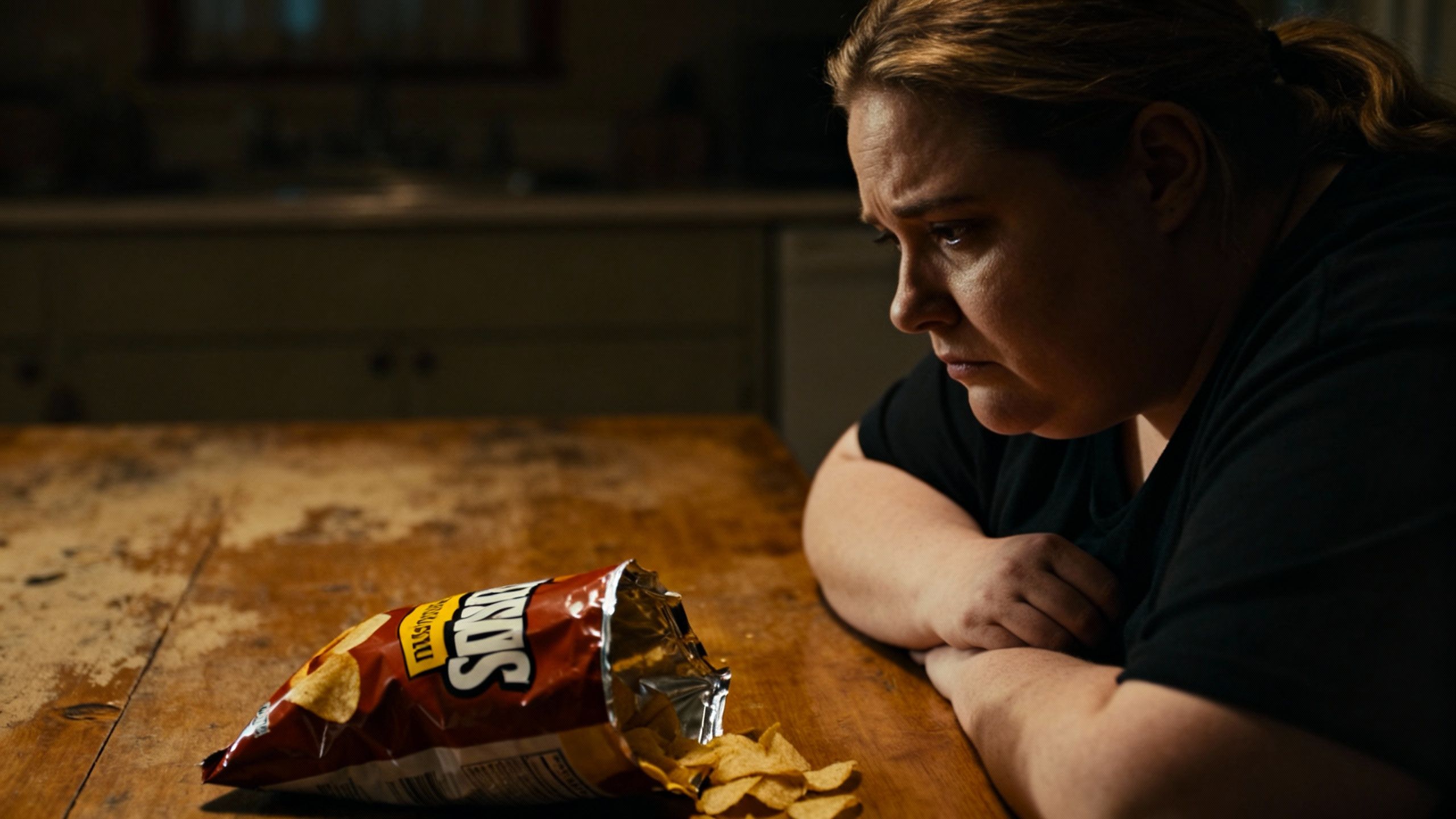
Emotional Eating Is Not About Food. It’s About Unmet Emotional Hunger.
Most women don’t emotionally eat because they love food.
They eat because food doesn’t leave.
Doesn’t judge.
Doesn’t reject.
Doesn’t make them feel like too much or not enough.
Food becomes the safest relationship they’ve ever had.
Emotional eating is not about cravings.
It’s about comfort.
Control.
Soothing.
Silencing.
It’s about a woman trying to regulate pain she was never taught how to feel.
And the world keeps telling her to fix her diet when what she actually needs is to understand her heart.
The Lie: “I Just Lack Discipline”
Most women who emotionally eat believe something is wrong with them. Weak. Addicted. Broken. Out of control.
That belief is the wound talking.
Because emotional eating is not a failure of willpower.
It is a learned coping strategy.
Some learned it in childhood when emotions weren’t welcomed.
Some learned it in relationships where love felt conditional.
Some learned it in environments where being strong was praised and being honest was punished.
Food became the one place they could feel comfort without conflict.
You don’t emotionally eat because you’re broken.
You emotionally eat because at some point, it worked.

Cycle No One Talks About
Emotional eating almost always follows the same pattern:
Trigger → Emotion → Food → Relief → Shame → Self-attack → Repeat.
Loneliness.
Rejection.
Stress.
Boredom.
Resentment.
Grief.
Unmet needs.
Food temporarily quiets the feeling.
Then the mind punishes the body for trying to survive.
And that punishment becomes the next trigger.
This is why dieting alone never heals emotional eating.
Because the cycle is emotional, not nutritional.
Trauma: Where Emotional Eating Is Born
Trauma doesn’t have to be abuse to shape behavior.
Trauma is anything that taught you your emotions were unsafe, inconvenient, or unimportant.
A child who wasn’t comforted learns to comfort herself.
A child who wasn’t protected learns to numb herself.
A child who wasn’t chosen learns to fill the emptiness.
Emotional eating often begins in childhood as:
• Eating when alone
• Eating when bored
• Eating when sad
• Eating when scared
• Eating to feel full when love felt empty
The body remembers.
So when adulthood brings stress, rejection, conflict, or loneliness, the body returns to the same solution.
Not because you’re weak.
Because your nervous system recognizes familiarity.
Emotional Eating and Self-Worth
At its core, emotional eating is often tied to self-worth.
A woman who doesn’t feel enough will look for enough in food.
A woman who feels unseen will look for fullness.
A woman who feels unloved will look for comfort.
Food becomes the place she doesn’t have to earn anything.
But the cost is high.
Because every episode reinforces the belief:
“I can’t trust myself.”
“I’m out of control.”
“I’m broken.”
And that belief hurts more than the food ever could.
Emotional Eating in Relationships
This is where it gets uncomfortable.
Many women emotionally eat not because of food…
but because of the relationship they are in.
They emotionally eat when:
• They feel unchosen
• They feel emotionally lonely
• They feel invisible in the relationship
• They feel like they’re too much
• They feel like they’re not enough
Food becomes the replacement for emotional connection.
When a woman isn’t emotionally nourished, she will try to fill herself elsewhere.
And the most painful part?
She often blames herself instead of recognizing the emotional starvation she’s living in.
You Are Not Hungry for Food
You are hungry for:
Safety.
Connection.
Validation.
Rest.
Voice.
Presence.
Truth.
And until those needs are acknowledged, food will continue to volunteer.
How Healing Actually Begins
Healing emotional eating does not start with control.
It starts with curiosity.
Instead of asking, “Why did I eat that?”
Ask, “What was I feeling right before I wanted it?”
Instead of attacking yourself, listen.
Because every urge is a message.
And every message is pointing back to a feeling you learned to avoid.
Practical Reflection Prompts
These are not journal fluff.
These are mirror questions.
Have your client sit with these slowly:
- What emotion shows up most often before I emotionally eat?
- What am I trying not to feel in that moment?
- What do I believe about myself when I emotionally eat?
- When did I first learn to use food for comfort?
- What do I actually need in those moments instead of food?
- If food could talk, what would it say it’s protecting me from?
- Where in my life do I feel emotionally hungry?
- What relationship in my life leaves me feeling empty?
- What would it look like to comfort myself without punishment?
- What am I afraid would happen if I didn’t numb?
Let the answers be messy.
Truth doesn’t come out polished.
The Shift That Changes Everything
The moment emotional eating starts to heal is when a woman stops making herself the enemy.
When she stops asking, “What’s wrong with me?”
and starts asking, “What happened to me?”
When she realizes food was never the problem.
It was the solution to something deeper.
And now she gets to choose a new one.
For the Woman Reading This
You are not weak.
You are not addicted.
You are not broken.
You are a woman who learned how to survive in a world that did not teach her how to feel safely.
And survival patterns don’t disappear through shame.
They disappear through compassion, awareness, and truth.
The Hard Truth
If you emotionally eat, it is not because you lack discipline.
It is because at some point, no one taught you how to stay with your feelings without abandoning yourself.
And now you get to learn.
Not by fighting your body.
But by finally listening to it.
Key Points about Emotional Eating
- Food Is a Safe Haven for Emotional Needs: Women often turn to food because it offers unconditional comfort, not necessarily due to physical hunger, but to soothe unmet emotional needs.
- Emotional Eating Is About Unmet Emotions, Not Flaws: It’s a common misconception that emotional eating stems from weakness; in reality, it’s a learned coping mechanism from childhood or traumatic experiences.
- The Cycle of Emotional Eating: This cycle involves triggers like loneliness or stress, leading to eating for relief, followed by shame and self-attack, then repeating the pattern.
- Trauma Shapes Emotional Eating: Experiences in childhood or traumatic events teach the body to seek comfort in food when facing stress or rejection later in life.
- Healing Begins With Compassion and Awareness: Recovery from emotional eating involves understanding that it’s a response to emotional hunger and learning to listen and respond compassionately to your feelings.
FAQs
1. What is emotional eating really about beyond food?
Emotional eating is about unmet emotional needs such as safety, connection, validation, and rest, rather than just physical hunger or cravings.
2. Why do women often believe they lack discipline when emotionally eating?
Women often think they lack discipline because they see emotional eating as a failure of willpower, but it’s actually a learned coping mechanism from childhood or traumatic experiences.
3. Can emotional eating be traced back to trauma?
Yes, emotional eating often originates from childhood or traumatic experiences that taught the body to seek comfort in food when facing stress, rejection, or loneliness later in life.
4. What is the cycle of emotional eating and why does dieting not help?
The cycle involves trigger, emotion, food, relief, shame, and self-attack, repeating itself, and dieting alone cannot heal it because emotional eating is driven by emotional, not nutritional, needs.
5. How can understanding and compassion help in healing emotional eating?
Healing begins with curiosity and compassion, by listening to your feelings and understanding that emotional eating is a response to unmet needs, not a failure, which allows for a healthier way to respond.
Reading Resources
-
End Emotional Eating — Jennifer Taitz
Clinically sound, practical, and not fluffy. Gives real tools (DBT-based) to interrupt emotional eating patterns at the emotional cue level. -
Intuitive Eating — Evelyn Tribole & Elyse Resch
Not about weight loss. Rewires the relationship with food, hunger cues, and self-trust — which is exactly what emotional eaters lack. -
The Emotional Eating Workbook — Carolyn Coker Ross
Worksheets, prompts, and exercises. Helps women do the work instead of just reading about it. -
The Emotional Eater’s Repair Manual — Julie M. Simon
Addresses the emotional drivers and offers clear, step-by-step interventions rooted in emotion science, not diet dogma. -
Hunger: A Memoir of (My) Body — Roxane Gay
Not a self-help book, but a masterclass in understanding the lived experience behind emotional eating, trauma, body shame, and self-worth — the context most programs skirt.
