
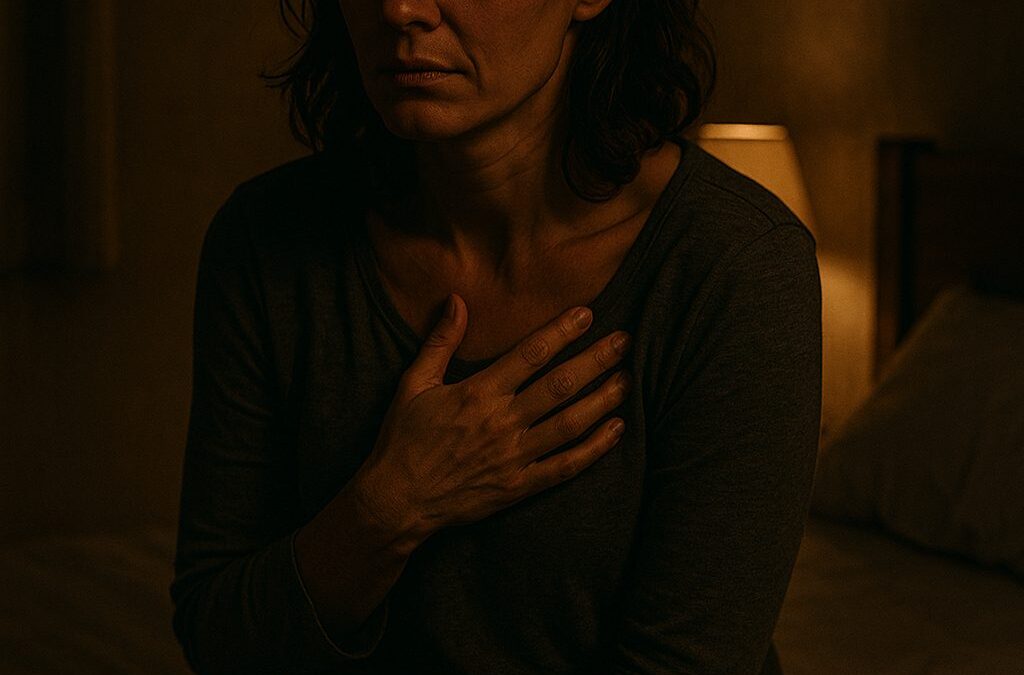
Most people think anxiety is just about overthinking. Racing thoughts. Restlessness. Maybe even fear of the future. But if you’ve tried every breathing technique, read every self-help book, and still find yourself stuck in the same emotional patterns, then you’re not just dealing with anxiety—you’re dealing with complex anxiety and the anxiety cycle.
Unlike general anxiety, complex anxiety doesn’t come from what might happen. It comes from what already did. From the emotional wounds you never processed. From the trauma you minimized. From the pain you learned to perform your way out of. And until you go back and feel what you were never allowed to feel, you’ll keep living out the same emotional cycle—naming it anxiety, but never healing it.
The Root of Complex Anxiety: The Pain You Buried
Emma came to me as a highly accomplished professional—intelligent, capable, and on paper, thriving. But beneath the surface? She was drowning in loneliness, shame, and confusion. Not because she didn’t know how to think her way through life—but because she never learned how to feel her way through it.
Her story is one I see often: emotionally distant father, golden-child sibling, years of feeling invisible while pretending to be okay. No big “T” trauma. Just a lifetime of small traumas that add up. Dismissed feelings. Subtle comparisons. Unspoken grief. Her anxiety wasn’t random—it was her body screaming out the emotions her mind had spent years trying to suppress.
And like many others, Emma found herself in the anxiety cycle: A trigger happens—someone ignores her, withdraws, or rejects her. Thoughts rush in: “What did I do wrong?” That leads to feelings of shame, rejection, and unworthiness. Instead of sitting with the emotion, she distracts—food, work, social media, isolation. Then it happens again. And again. Until it becomes a lifestyle. A default. An identity.
The Problem: This Isn’t Just Anxiety—It’s a Survival Response
Complex anxiety is misunderstood because it wears different masks. It looks like social anxiety, avoidance, burnout, or even high achievement. But at its core, it’s a survival response to unhealed emotional pain.
You’ve probably heard about functional depression too—the kind where you show up, meet deadlines, smile in meetings… but you feel completely disconnected from yourself. That’s not laziness. That’s not “low energy.” That’s emotional shutdown from years of pushing down your anger, grief, and shame.
The biggest mistake? Believing this is a thinking problem. It’s not. You can’t outthink trauma. You can’t heal what you refuse to feel.
The Solution: Emotional Healing Starts in the Body, Not the Mind
Here’s what healing complex anxiety actually looks like:
1. Recognize the Anxiety Cycle
Track the pattern: trigger → thought → feeling → action. Becoming aware of this cycle is the first step to breaking it.
2. Feel the Emotion in Your Body
Where is the anxiety living? Is it in your chest? Your stomach? Your throat? That’s your body trying to get your attention. Stop labeling it. Start locating it.
3. Sit With It—Not In It
Sitting in your emotions means looping in the story or trying to fix it. Sitting with your emotions means letting them rise, naming them without judgment, and allowing yourself to simply feel. That’s where healing happens.
4. Ask the Right Question
Stop asking why—why am I like this, why don’t they like me, why does this keep happening? That’s how you stay stuck. Instead, ask what: What inside me still needs to be felt? What part of me is still hurting?
5. Validate Your Pain
You can’t heal emotions you continue to dismiss. Validation isn’t about saying it’s okay—it’s about saying, “This matters. I matter.” Only then can you release it.
Healing Complex Anxiety Means Rewriting Your Story
Complex anxiety isn’t a flaw. It’s a signal. It’s your body trying to finally process the emotional weight you’ve carried for far too long. When you stop trying to manage your symptoms and start addressing your core wounds, everything begins to change.
You don’t need another label. You need to feel what was never safe to feel. That’s how you stop the cycle. That’s how you reconnect with yourself. And that’s how you finally move from survival to freedom.
What Others Are Asking
❓1. What is complex anxiety?
Complex anxiety stems from unprocessed emotional trauma, often rooted in childhood experiences like neglect, emotional invalidation, or abandonment. It’s not just fear of the future—it’s the echo of past wounds that haven’t been healed, playing out through your body and behaviors.
❓2. How is complex anxiety different from general anxiety?
General anxiety focuses on the future—the “what ifs.”
Complex anxiety is rooted in the past—the “what was.” It often shows up as emotional overreactions, chronic overthinking, social anxiety, or feeling unworthy, even when things are “fine” on the surface.
❓3. What causes complex anxiety?
Complex anxiety is caused by core wounds from unresolved trauma. This includes emotionally distant caregivers, sibling comparisons, bullying, or being forced to suppress emotions. These create belief systems and behaviors that keep you trapped in emotional survival mode.
❓4. Can complex anxiety lead to depression?
Yes. Functional depression is common in those with complex anxiety. You keep going, working, showing up—but inside, you feel numb, disconnected, or angry. This quiet, internal suffering is often mistaken for burnout or fatigue when it’s really unprocessed pain.
❓5. How do I start healing complex anxiety?
Stop analyzing. Start feeling.
Track your emotional triggers, locate sensations in your body, and validate your feelings without judgment. Ask “what needs to heal inside me?” instead of “why am I like this?” Healing happens when you feel your way through, not think your way out.
Books To Help You Heal
1. The Body Keeps the Score by Bessel van der Kolk, M.D.
A seminal work that explores how trauma reshapes both body and brain, compromising sufferers’ capacities for pleasure, engagement, self-control, and trust. Dr. van der Kolk integrates recent scientific advances with clinical case studies to show how innovative treatments—such as neurofeedback, mindfulness techniques, play, yoga, and other therapies—offer new paths to recovery.
2. Complex PTSD: From Surviving to Thriving by Pete Walker
This guide offers practical tools for those suffering from Complex PTSD, a condition that arises from prolonged exposure to relational trauma. Walker provides insights into managing emotional flashbacks, self-abandonment, and toxic shame, aiming to help readers move from a state of survival to one of thriving.
3. The Complex PTSD Workbook by Arielle Schwartz, Ph.D.
A hands-on workbook designed to help individuals understand and heal from Complex PTSD. Dr. Schwartz combines mindfulness, cognitive-behavioral therapy (CBT), and somatic therapy techniques to assist readers in developing self-awareness and resilience.
4. High Functioning: Overcome Your Hidden Depression and Reclaim Your Joy by Judith Joseph, M.D.
Dr. Joseph addresses the often-overlooked phenomenon of high-functioning depression, where individuals appear successful externally but struggle internally. The book offers strategies to recognize hidden depression and provides tools to reclaim joy and emotional well-being.
5. It Didn’t Start With You by Mark Wolynn
Wolynn explores the concept of inherited family trauma and its impact on our lives. Through a combination of personal stories, case studies, and practical tools, the book guides readers in identifying and breaking the cycle of inherited emotional patterns.
Want to go deeper? Book a 1:1 emotional healing session or explore our online courses designed to help you heal your anxiety from the inside out.
Common Forms of Anxiety Disorders
Anxiety is a common occurrence when a person faces potentially problematic or dangerous situations. It is also felt when a person perceives an external threat. However, chronic and irrational anxiety can lead to a form of anxiety disorder. There are different types of anxiety disorder depending on their causes or triggers.
Generalized anxiety disorder
A person who has this type of anxiety disorder usually experiences prolonged anxiety that is often without basis. People with generalized anxiety disorder cannot always articulate the reason behind their anxiety. This type of anxiety usually lasts for six months and often affects women. Due to the persistence of the anxiety, people affected with generalized anxiety disorder constantly fret and worry. This results in heart palpitations, insomnia, headaches, and dizzy spells.
Specific phobia
Unlike someone with a generalized anxiety disorder, a person who has a specific phobia experiences extreme and often irrational fear of a certain situation or object. When exposed to the object or situation they fear, people with specific phobias exhibit signs of intense fear like shaking, shortness of breath, heart palpitations, and nausea. Common specific phobias include fear of heights, enclosed spaces, blood, and animals. The fear a person with phobia feels can be so extreme that he or she may disregard safety just to escape the situation.
Panic disorder
Panic disorder is not the same as agoraphobia. Panic disorder is characterized by recurring panic attacks which are often unexpected. Symptoms are usually shaking, chest pains, dizziness, fear of losing control, and a reluctance of being alone. People with panic disorder are aware that their panic is usually unfounded and illogical. A panic attack can be so severe that people may lose control and hurt themselves. Agoraphobia, by contrast, is a separate pattern of fear and avoidance of situations where escape might be difficult.
Social phobia
Alternatively called social anxiety, a person with social phobia may exhibit similar symptoms like those of panic disorder especially in social situations. Shaking, dizziness, shortness of breath, and heart palpitations may ensue when a person with social phobia finds his or herself at the center of attention or in the company of many people, regardless whether they are strangers or not.
Obsessive-compulsive disorder
People with obsessive-compulsive disorder experience anxiety caused by a persistent obsession or idea. They tend to avoid experiencing anxiety by resorting to repetitive actions or behaviors that prevent anxiety. For example, a person who is obsessed about cleanliness may experience anxiety at the mere sight of a vase placed slightly off-center. To prevent anxiety, he or she will clean and organize everything compulsively or without reason.
PTSD
Post-traumatic stress disorder may occur after a person experienced a severely traumatic event. He or she may relive the experience in his or her mind which causes stress and anxiety. If a person with PTSD comes into contact with stimuli (any object, person, or situation) that he or she associates with the traumatic event, he or she may literally re-experience the event by crying uncontrollably, panicking, or losing control. Subtler symptoms include insomnia and avoidant behavior. PTSD may manifest itself immediately after the traumatic event or even years after.
Determining the type of anxiety disorder a person has is crucial to seeking treatment and recovery.
Living in Fear, Panic, and Finding Help
Fear is a natural response to perceived danger. It is our body’s response to a threat in our surrounding environment, and when the threat dissipates, normally so does the fear.
When fear does not subside
Unhealthy fear does not seem to subside. It lingers in our body and puts us into “fight, flight, freeze” mode, and we become hypervigilant. When someone is living in fear, they may perceive danger when there is none. This can lead to panic attacks, various anxiety conditions, and disruption to our body and daily lives. Any type of fear that persists and begins to interfere with work, relationships, and everyday life is very likely a sign of an anxiety condition.
The fear of fear and panic attacks
Excessive fear can ultimately lead to panic attacks or even a panic disorder. Panic attacks can come out of nowhere. They may feel like the world is closing in on you. Some of the characteristics include excessive sweating, trembling, chest tightening, feeling as if you cannot breathe, blurred vision, disorientation, or fear you are having a heart attack, among others.
Panic attack treatments may include medication for anxiety and/or depression, therapy (such as a counselor, psychologist, or anxiety coach), exercise, meditation, breathing techniques, tapping, or even acupuncture, just to name a few. Seeking help with one or more of these panic attack treatments is the first step to recovery.
A note on Emotional Freedom Techniques (EFT)
Emotional Freedom Techniques (EFT) is a tapping-based approach based on the idea that working through emotionally unresolved issues can help a person feel more peaceful. It is one approach some people explore alongside other support, such as therapy or coaching. It is not presented here as a cure, and it does not promise freedom from all physical or mental health issues. Whether what you experience seems mild or severe, getting support for an anxiety condition is important for overall health and well-being.
Why avoiding the fear can make it worse
Unhealthy coping, such as drugs, alcohol, sex, binge eating, self-medicating, or distraction, are all ways that can feed the fear and anxiety, ending up making things worse. When we distract ourselves and avoid feeling the fear, we think this will just make it all go away. What actually happens many times is that we end up adding to the anxiety condition with the likes of addiction, depression, isolation, numbing, and feelings of shame. Avoiding help can exacerbate the symptoms. These feelings will not just suddenly disappear, even though it may seem like they do at the time. Whatever the original cause or causes may have been, such as trauma, bullying, neglect, or abuse, they will eventually keep resurfacing until you make the choice to face them head-on.
It is okay not to be okay
Many feel what they are experiencing is not severe enough to seek help. Others feel the shame attached would be too much to talk about. Anxiety conditions are one of the leading causes of mental health distress in this day and age. You are not alone in your suffering. Do not allow fear and anxiety to steal from you. Seeking anxiety treatment or panic attack treatment is nothing to feel ashamed about. Healing yourself not only helps you get your life back on track, but it also helps those around you to know that it is okay not to be okay.

You’ve explained this in a way that’s so easy to understand.